Best Web Development Company in India for SEO, Speed & Conversion
A high-performing website connects technology, search visibility and customer action from the first planning decision. Digital Fabric Lab builds websites that are fast, easy to navigate, search-ready and structured around the way real customers discover, evaluate and contact a business.
Our web development service brings SEO strategy into the build itself. Information architecture, page hierarchy, internal linking, semantic markup, Core Web Vitals, structured data opportunities, mobile experience, analytics and conversion paths are considered alongside design and development.
Projects can range from business websites and service-led marketing sites to ecommerce stores, WordPress builds, modern React or Next.js experiences, landing pages, portals and selected web applications. The technology is chosen around the business model, content needs, scalability requirements and long-term growth plan.
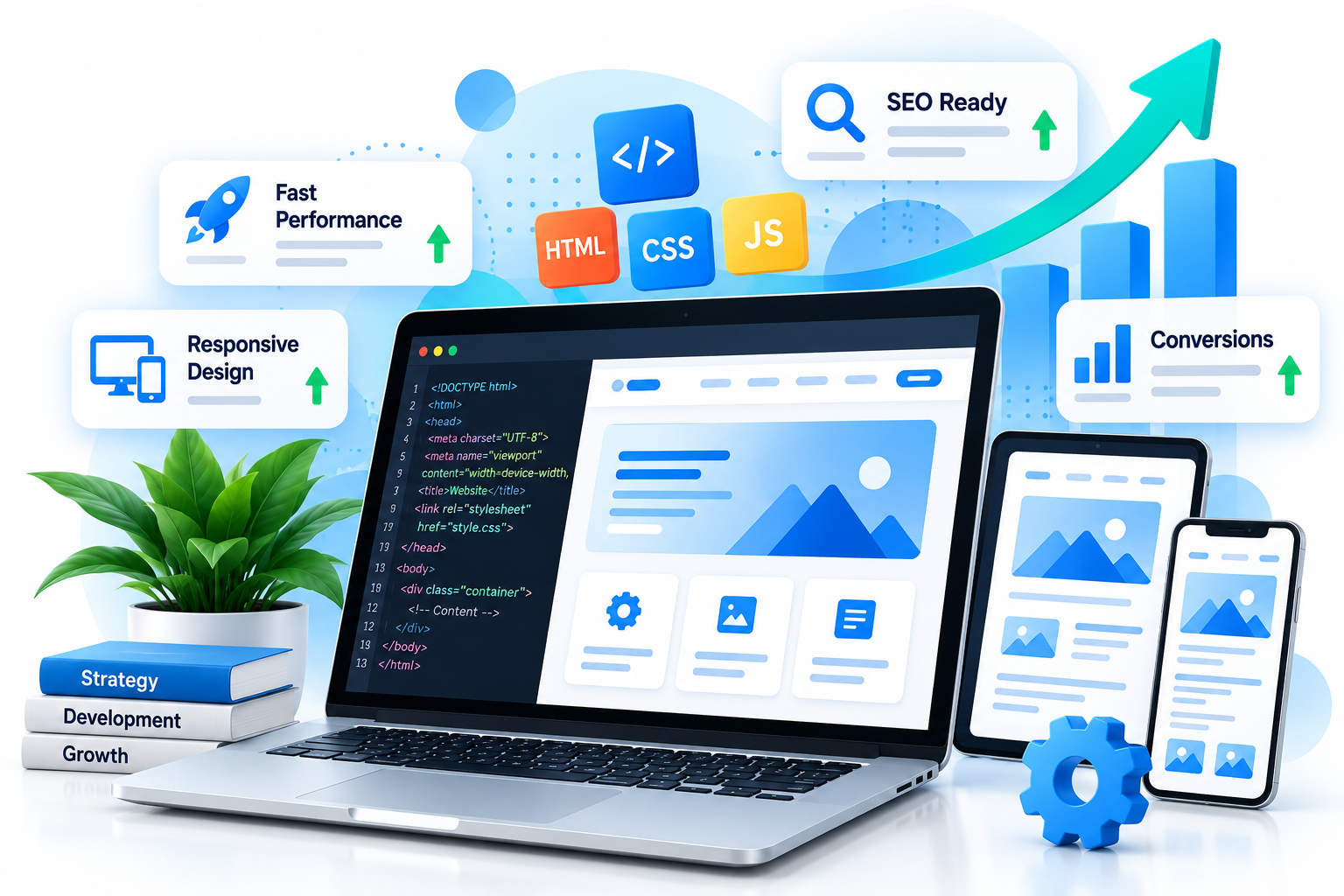
Build the Website Around How Customers Search, Evaluate & Act
A website performs best when its structure mirrors the journey a potential customer takes. Searchers may first discover a service through Google, compare several providers, explore proof and pricing context, review FAQs and finally decide whether to enquire, book, buy or request a demo.
We plan pages around those decision stages. Navigation supports discovery, service pages own clear commercial intent, supporting content answers evaluation questions, and conversion elements appear where a visitor naturally needs a next step. The result is a website architecture that supports both visibility and user confidence.
Web Development Services for Different Business Goals
Business Website Development
Professional business websites for companies that need to explain their services clearly, establish credibility and turn organic, referral or paid traffic into qualified enquiries. We plan the site around priority services, industries, locations, proof and conversion goals so the website can support marketing as it grows.
Custom Website Development
Custom website builds give businesses control over structure, functionality, design systems and integrations. We shape the experience around the actual requirements instead of forcing the business into a rigid template. This is useful for brands that need distinctive workflows, dynamic content, advanced forms, account features or specialized integrations.
WordPress Development
WordPress can be a strong fit for content-led businesses, service companies, publishers and teams that need flexible editing. We structure themes, blocks, templates, plugins and content models around maintainability, performance, SEO and ease of use for the internal team.
Ecommerce Website Development
We build ecommerce experiences around product discovery, category structure, mobile shopping, checkout flow, payments, product data and organic search growth. The architecture can support product and category SEO, structured data, internal linking and future catalog expansion.
React & Next.js Website Development
Modern JavaScript frameworks can support fast, interactive websites when rendering, routing, metadata, crawlable links and performance are planned correctly. We use React and Next.js where they suit the project, with attention to server rendering, indexable content, page speed, structured information and scalable component systems.
Landing Page Development
Landing pages are designed around a focused audience, offer and action. We combine concise messaging, visual hierarchy, trust elements, responsive design, fast loading and measurable CTA events so the page supports campaign, product-launch or lead-generation goals.
Website Redesign & Rebuild
A redesign is an opportunity to improve brand presentation, site structure, content journeys, performance and conversion together. For existing organic visibility, we also map important URLs, content, metadata, internal links and redirects so the new build carries forward the search value of the current site.
Web Portals & Browser-Based Experiences
Client areas, dashboards, booking journeys, account portals and browser-based business experiences can be developed when the project sits naturally within the website ecosystem. Larger SaaS, ERP, CRM and operations-heavy platforms are planned under our Custom Software Development service so each page has clear intent ownership.
SEO Is Built Into the Web Architecture
Digital Fabric Lab is SEO-first, so development decisions are made with crawlability, indexation, relevance and future content growth in mind. This creates a cleaner base for technical SEO and reduces the amount of structural rework required after launch.
Search-Friendly Information Architecture
The sitemap, hierarchy and URL structure are planned around services, products, audiences, topics and search intent. This makes important content easier to discover for both users and search engines while creating room for future service, city, industry and insight pages.
Semantic HTML & Heading Structure
Pages use meaningful HTML elements and a logical H1, H2 and H3 hierarchy. This improves content clarity, accessibility and the way search systems interpret the relationship between topics and sections.
Core Web Vitals & Front-End Performance
Layout, images, fonts, scripts, components, caching and rendering choices are reviewed with real-world speed in mind. Performance work supports user experience, mobile engagement and the technical foundation required for competitive search.
Metadata, Canonicals & Indexation Controls
Templates are structured to support unique titles, descriptions, canonicals, robots directives and indexation rules where required. This gives the SEO team clean control over how important pages are represented to search engines.
Internal Linking & Crawl Paths
Navigation, contextual links, breadcrumbs and related-content pathways help users move through the site while distributing internal authority toward important commercial pages. Priority pages are kept within sensible crawl depth wherever the site architecture allows it.
Schema-Ready Page Structure
Visible page content and business entities are organized so relevant structured data can be implemented accurately. Depending on the website, this may include Organization, Service, Product, BreadcrumbList, Article and other schema types that match the page purpose.
Analytics & Search Measurement
Google Analytics 4, Google Search Console and conversion events can be prepared as part of launch so traffic, enquiries, purchases and other valuable actions can be measured from the beginning.
Design Pages Around Clarity, Trust & Customer Action
Good web development gives the user a clear path through the page. Visual design, copy hierarchy, spacing, navigation, proof and calls to action should help a visitor understand the business quickly and feel confident about the next step.
Clear Value Communication
The strongest message appears early, followed by the services, benefits, proof and details a potential customer is likely to need. This reduces unnecessary cognitive load and helps visitors understand relevance faster.
Conversion Paths That Match Intent
A visitor researching a service may need a consultation, while an ecommerce customer may need product discovery and checkout. Forms, calls, WhatsApp, booking actions, demos and purchase paths are placed according to the purpose of the page and stage of the journey.
Trust-Building Content Blocks
Case studies, project examples, process clarity, team information, service scope, FAQs and verified proof can be placed where they strengthen decision-making. The exact proof used should reflect real business evidence available for the website.
Mobile-First User Experience
Layouts are planned for the way people actually browse on phones: readable typography, comfortable tap targets, focused navigation, concise section flow, fast assets and visible conversion actions.
Technology Chosen Around the Website, Team & Growth Plan
The best stack is the one that supports the project’s content model, features, performance needs, editing workflow and future roadmap. Digital Fabric Lab can work across modern and established platforms without forcing every website into the same architecture.
Frontend & Full-Stack
HTML5, CSS, JavaScript, TypeScript, React, Next.js and suitable component systems can be used for responsive interfaces and interactive experiences.
CMS & Ecommerce
WordPress, WooCommerce, Shopify and custom CMS patterns can support editorial teams, service businesses, content-heavy websites and ecommerce operations.
Backend & Integrations
Node.js, PHP, Laravel, APIs and database integrations can support forms, accounts, payment flows, CRM connections, third-party services and dynamic website functionality.
Data & Infrastructure
MySQL, PostgreSQL, MongoDB, cloud hosting, CDN, caching and deployment workflows are selected according to scale, technical requirements and maintainability.
The Digital Fabric Lab Web Development Workflow
1. Business, Audience & Search Discovery
We define the website’s commercial goals, priority audiences, services, products, markets, competitors and search opportunities before shaping the structure.
2. Sitemap & Page Ownership
Every meaningful page is assigned a clear purpose. Service, product, industry, location and informational intent are separated so the site can grow without unnecessary overlap.
3. Wireframes & User Journeys
Key page layouts are planned around navigation, information priority, trust, mobile use and conversion actions.
4. UI Design System
Visual direction, typography, components, spacing and reusable design patterns are created to keep the website consistent across pages and future expansion.
5. Development & CMS Implementation
Approved designs are developed with responsive behavior, reusable components, content editing requirements and technical integrations in mind.
6. SEO, Performance & Structured Data Layer
Metadata frameworks, semantic structure, internal linking, crawl controls, performance work, structured data opportunities and analytics are aligned before launch.
7. Quality Assurance
Key pages and user journeys are reviewed across relevant screen sizes and browsers. Forms, buttons, navigation, integrations, content, redirects, metadata and tracking are checked against the launch plan.
8. Launch, Measurement & Growth
After deployment, the website can be connected to Search Console, analytics and conversion measurement. Future SEO pages, content, CRO improvements and development iterations can then build on the same architecture.
Performance, Security & Launch Quality as Core Development Requirements
Speed, stability and secure implementation influence how people experience the website and how confidently a business can scale it. We treat these as core parts of the build rather than isolated finishing tasks.
Web Development for Key Business Models
Local & Professional Service Businesses
Service-led websites can combine clear offer pages, city or service-area structure, Google Maps support, reviews, enquiry paths and content that answers high-intent customer questions.
B2B & Professional Services
B2B websites often need solution pages, industry context, case studies, thought leadership, lead forms and integrations that support a longer sales cycle and multiple stakeholders.
SaaS & Technology Brands
Marketing websites for SaaS products can organize features, solutions, use cases, integrations, comparisons, documentation and demo journeys around the way prospects evaluate software.
Ecommerce & D2C
Ecommerce builds connect category architecture, product content, discovery, filtering, structured data, checkout and analytics so the website can support both paid and organic acquisition.
Education & Training
Course, program, faculty, location, admission, result and enquiry journeys can be structured into an organized website that supports student research and search visibility.
Healthcare & Trust-Sensitive Services
Clear service information, practitioner or organization details, appointment journeys, location signals and carefully structured content can help users find and evaluate important information efficiently.
Real Estate & Property
Property websites can organize projects, locations, configurations, developer information, lead journeys and search-friendly content into a structure that supports both discovery and enquiry generation.
Why Digital Fabric Lab Connects Web Development With SEO Strategy
SEO-First Architecture From the Planning Stage
Keyword intent, page ownership, internal linking and future content expansion are considered before development decisions are locked in. This gives SEO a place in the architecture rather than limiting it to post-launch edits.
Development Capability for Technical SEO Execution
When SEO priorities require changes to templates, rendering, structured data, performance, redirects, navigation or analytics, development and search strategy can move through the same workflow.
Conversion Thinking Inside the Page Structure
The site is organized around the business actions that matter: calls, forms, demos, bookings, purchases or other measurable outcomes. Search visibility and user action are planned as connected parts of the experience.
Growth-Ready Structure for Future SEO Expansion
A clean architecture can support new service pages, location pages, industry pages, ecommerce categories, resource hubs and campaigns without repeatedly rebuilding the foundation.
One Connected View of Search, UX & Technology
Technical decisions affect crawlability, design affects comprehension, content affects relevance and conversion affects business value. Our workflow brings these factors together so the website works as one connected digital growth system.
Web Development and SEO Work Better From the Same Foundation
Digital Fabric Lab positions SEO as its primary growth discipline and web development as the technical layer that helps strong search strategy become a better website experience. When both are planned together, page architecture, Core Web Vitals, internal linking, content structure, schema opportunities and conversion paths can reinforce the same growth goals.
This also creates a cleaner handoff between the website and future SEO campaigns. New landing pages can follow established templates, technical improvements can be prioritized quickly, and search data can guide future development decisions.
Frequently Asked Questions
Create a Website Foundation for Search, Sales & Scale
A website should make it easier for customers to find the business, understand the offer and take the next step. Digital Fabric Lab combines web development, SEO architecture, performance and conversion planning so the website is ready to support growth from launch and keep expanding with the business.
Start with the pages, features, search opportunities and customer journeys that matter most. We can turn them into a clear development roadmap and a website structure built for long-term use.